A Practical Guide to Water Treatment for Homes, Businesses, and Farms

Water plays a different role in every property. At home, it needs to be pleasant for drinking, bathing, and cleaning. In a business, water quality can affect equipment, customers, and daily operations. On a farm, it becomes part of a much larger system involving livestock, irrigation, crops, and long-term productivity. One thing remains true across all these settings: water problems are easier to manage when they are understood early.
Choosing a treatment system, though, isn’t always straightforward. There are filters, softeners, reverse osmosis units, iron removal systems, and several specialized options. The right choice depends on the water source, the contaminants involved, and how the water will be used. A solution that works beautifully in a kitchen may be completely unsuitable for a large agricultural operation.
Why Water Treatment Starts With Testing
Before investing in equipment, property owners should understand what is actually present in their water. Municipal supplies are treated and monitored, but their mineral content and taste can still vary. Private wells may contain naturally occurring minerals, sediment, iron, sulfur compounds, or other substances influenced by local geology.
A professional water analysis can identify concerns such as hardness, pH, iron, manganese, bacteria, nitrates, and other contaminants relevant to the water source. Testing is especially important when water is used for drinking, food preparation, livestock, or irrigation.
It’s easy to assume that cloudy water is the biggest problem, but some dissolved substances are invisible. On the other hand, not every unpleasant taste indicates a serious health risk. Testing helps separate genuine treatment needs from assumptions and makes the entire decision-making process more practical.
Home Water Treatment: More Than Just Better-Tasting Water
For homeowners, water treatment often begins with everyday frustrations. home water treatment White scale around faucets, dry-feeling skin, metallic tastes, or an unpleasant odor can make ordinary routines less enjoyable. Hard water may also reduce the efficiency of water heaters and leave mineral deposits on appliances.
Depending on the test results, a home system might include a sediment filter, activated carbon filter, water softener, or reverse osmosis unit. Sediment filters capture suspended particles, while carbon filtration is commonly used to reduce chlorine and improve taste and odor. Water softeners primarily address calcium and magnesium hardness.
The important distinction is that each system has a specific job. A softener is not a complete purifier, and a basic carbon filter may not be designed to reduce every dissolved contaminant. Selecting equipment based on actual water conditions is far more useful than buying a system simply because it is advertised as “all-in-one.”
Understanding Whole Home Reverse Osmosis
Reverse osmosis uses pressure to move water through a semipermeable membrane that reduces many dissolved substances. It is often installed under a kitchen sink, but some properties require broader treatment. In those cases, whole home reverse osmosis may be considered.
A whole-home RO system treats water before it reaches different fixtures throughout the property. This can be helpful when the goal is to provide highly treated water for drinking, cooking, bathing, laundry, and other household uses. However, it requires careful planning.
Water pressure, system capacity, storage, pretreatment, wastewater, and plumbing compatibility all need to be considered. Reverse osmosis can also remove minerals that contribute to water’s natural taste, so some installations include remineralization.
For many households, a point-of-use RO system may be more economical if only drinking water requires advanced treatment. Whole-home RO is a substantial investment and should be selected because the water conditions justify it, not simply because it sounds more comprehensive.
Water Treatment for Businesses and Commercial Properties
Commercial properties often have water needs that are more demanding than those of a typical home. Restaurants, hotels, offices, laundries, healthcare facilities, and manufacturing businesses may rely on water for cleaning, food preparation, cooling, or specialized equipment.
Hard water can create scale in boilers, water heaters, dishwashers, and other equipment. Sediment may clog valves and filters, while certain contaminants can interfere with production processes. In these settings, water treatment is not just about comfort. It can influence maintenance schedules, operating costs, and equipment reliability.
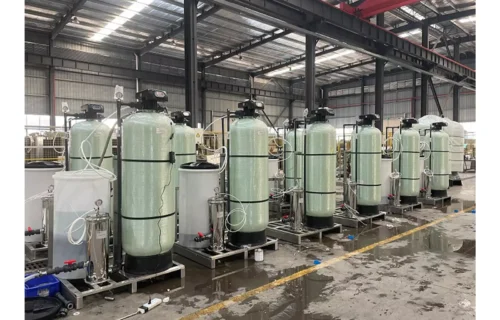
Commercial systems should be sized according to peak flow rates, daily water consumption, and the requirements of the business. A system that works for a small office may not be capable of handling a busy restaurant or industrial facility.
Businesses should also ask about monitoring and service agreements. Regular maintenance can help prevent unexpected downtime, which is often more expensive than the treatment equipment itself.
Farm & Agriculture Systems Require Special Planning
Agricultural water use comes with its own set of challenges. Farm & agriculture systems may supply irrigation, livestock watering, greenhouses, nurseries, or equipment-cleaning operations. The quality requirements can differ depending on the application.
For irrigation, factors such as salinity, sodium, pH, iron, and suspended solids may affect soil, crops, and irrigation equipment. Excessive sediment can clog drip lines and sprinklers, while certain dissolved minerals may accumulate in soil over time.
Livestock water quality also deserves attention. Animals need reliable access to suitable water, and unpleasant taste or excessive mineral content may affect consumption. However, the appropriate standards depend on the animal species, local conditions, and veterinary or agricultural guidance.
Agricultural treatment systems may include sediment filtration, iron removal, water softening, disinfection, or specialized systems for reducing salinity. The best approach depends heavily on water testing and the intended use. Treating irrigation water, for example, requires different considerations than treating water for a farmhouse kitchen.
Maintenance Makes the Difference
Even a well-designed system cannot perform properly forever without maintenance. Filters need replacement, membranes require servicing, softeners need regenerant management, and pumps or control components may need inspection.
In homes, neglected filters can reduce water pressure or affect taste. In commercial and agricultural settings, poor maintenance can interrupt operations and damage expensive equipment. Keeping a service schedule is a simple way to avoid these problems.
Property owners should ask about replacement costs, expected service life, warranty terms, and local technical support before installation. A system’s long-term operating requirements matter just as much as its initial price.
Choosing a Solution That Makes Sense
Water treatment should be approached as a practical investment, not a race to purchase the most advanced equipment available. Start with reliable testing, identify the actual problem, and consider how the water will be used.
From home filtration and softening to commercial treatment and agricultural systems, each application has different requirements. The right solution can improve water usability, protect equipment, and support more reliable daily operations.
In the end, good water treatment is about matching the technology to the need. When that connection is clear, the result is usually a system that works better, costs less to maintain, and provides value for years.